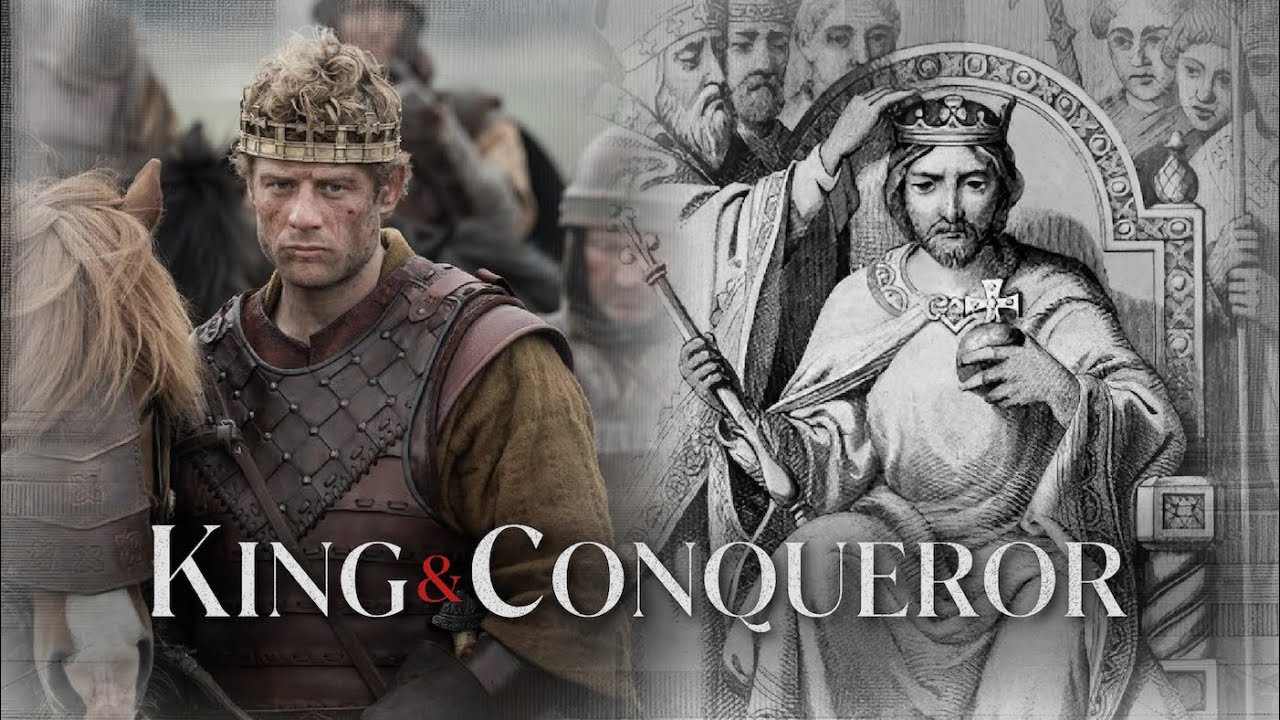
The Story of the Bayeux Tapestry
Shortly after 1066, someone set out to tell the story of the Norman Conquest in seventy metres of embroidered linen, and nearly a thousand years later we are still arguing about what it says.
The Bayeux Tapestry is one of the most famous objects to survive from medieval Europe, yet it is not really a tapestry at all, it was probably stitched by English hands rather than Norman ones, and its most celebrated scene, Harold with an arrow in his eye, may not show what most people think it shows. In this video, Present History follows the story from Harold Godwinson’s mysterious journey across the Channel to the bloodied field near Hastings, looking at how the work was made, who was likely behind it, what its borders and captions reveal, and how it survived revolution, Napoleon and the Second World War to reach us at all.
Along the way we ask the question that has followed the Tapestry for centuries: is it simply Norman propaganda, or does it leave room for a quieter English version of events?
📜 FURTHER READING David M. Wilson, The Bayeux Tapestry (Thames & Hudson, 1985) Carola Hicks, The Bayeux Tapestry: The Life Story of a Masterpiece (Chatto & Windus, 2006)
Watch on YouTube (6 min)