All Hallows' Eve: The Christian Story Behind Halloween
On the evening of 31 October 1785, if the date Robert Burns gives his poem can be trusted, the farm folk of Ayrshire gathered by the fire to pull kale stalks in the dark, burn nuts in pairs on the hearth and eat apples before a mirror, hoping to see the faces of their future husbands and wives. Burns called his poem “Halloween”. The title he chose carries the whole history of the night inside it, because Halloween is a contraction of All Hallows’ Even, the eve of All Saints’ Day, a Christian feast that by Burns’s time had been kept on 1 November across Western Christendom for almost a thousand years.¹ Every October we are told, by newspaper features, school worksheets and a good deal of earnest online commentary, that Halloween is an ancient pagan festival with a thin Christian coat of paint. The evidence tells a more interesting story, and it begins in Rome, in a building that was itself once a pagan temple.
In the early seventh century the Pantheon, the great domed temple Agrippa had founded and Hadrian rebuilt, stood unused in the heart of a much-reduced city. Around 609 or 610 the Emperor Phocas gave it to Pope Boniface IV, who dedicated it as a church to the Virgin Mary and all the martyrs. Bede, writing in Northumbria a little over a century later, recorded the event in his Ecclesiastical History, noting with evident satisfaction that a building once given over to “all the gods” now honoured all the saints.² The dedication took place on 13 May, and for generations afterwards Rome remembered its martyrs on that spring date. This matters a great deal, because if the Church had meant to swallow up a Celtic festival of the dead in late autumn, it began by choosing quite the wrong season, in quite the wrong city, for reasons that had nothing to do with Celts at all.
The move towards November came in the eighth century, though the path is less tidy than popular accounts suggest. The Liber Pontificalis, the official book of papal lives, records that Pope Gregory III (731–741) built an oratory in St Peter’s dedicated to the Saviour, his mother, the apostles, and all the martyrs and confessors “and all the just made perfect throughout the world”.³ Later tradition linked this foundation to 1 November, although the Liber Pontificalis itself does not give the date. What we can say with confidence is that by the end of the eighth century a feast of all saints was being kept on 1 November in Northumbria and in the circle of Alcuin of York, the Englishman who became the leading scholar at Charlemagne’s court and whose letters show him commending the feast to his friend Arno, Archbishop of Salzburg.⁴ In 835, at the urging of Pope Gregory IV, the Frankish emperor Louis the Pious ordered the feast to be kept on 1 November throughout his empire, and from there it spread across the Latin Church.⁵
That English and Frankish lineage is the first great problem for the pagan theory, and it is the point the historian Ronald Hutton has pressed hardest. The supposed connection runs through Samhain, the Irish festival that marked the start of winter on 1 November. Yet when we look at Ireland itself in the same period, where Samhain was strongest and where any missionary strategy of substitution would surely have been most needed, the Irish Church was commemorating all the saints in the spring. The early ninth-century calendar known as the Félire Óengusso, the Martyrology of Óengus the Culdee, places its great feast of the saints on 20 April.⁶ As Hutton observes, the November date appears to be a Germanic and English idea that travelled outward, and it reached the Celtic churches late rather than being born among them.⁷ The feast that gave Halloween its name did not begin as a response to Samhain, and the people who kept Samhain were among the last to adopt it.
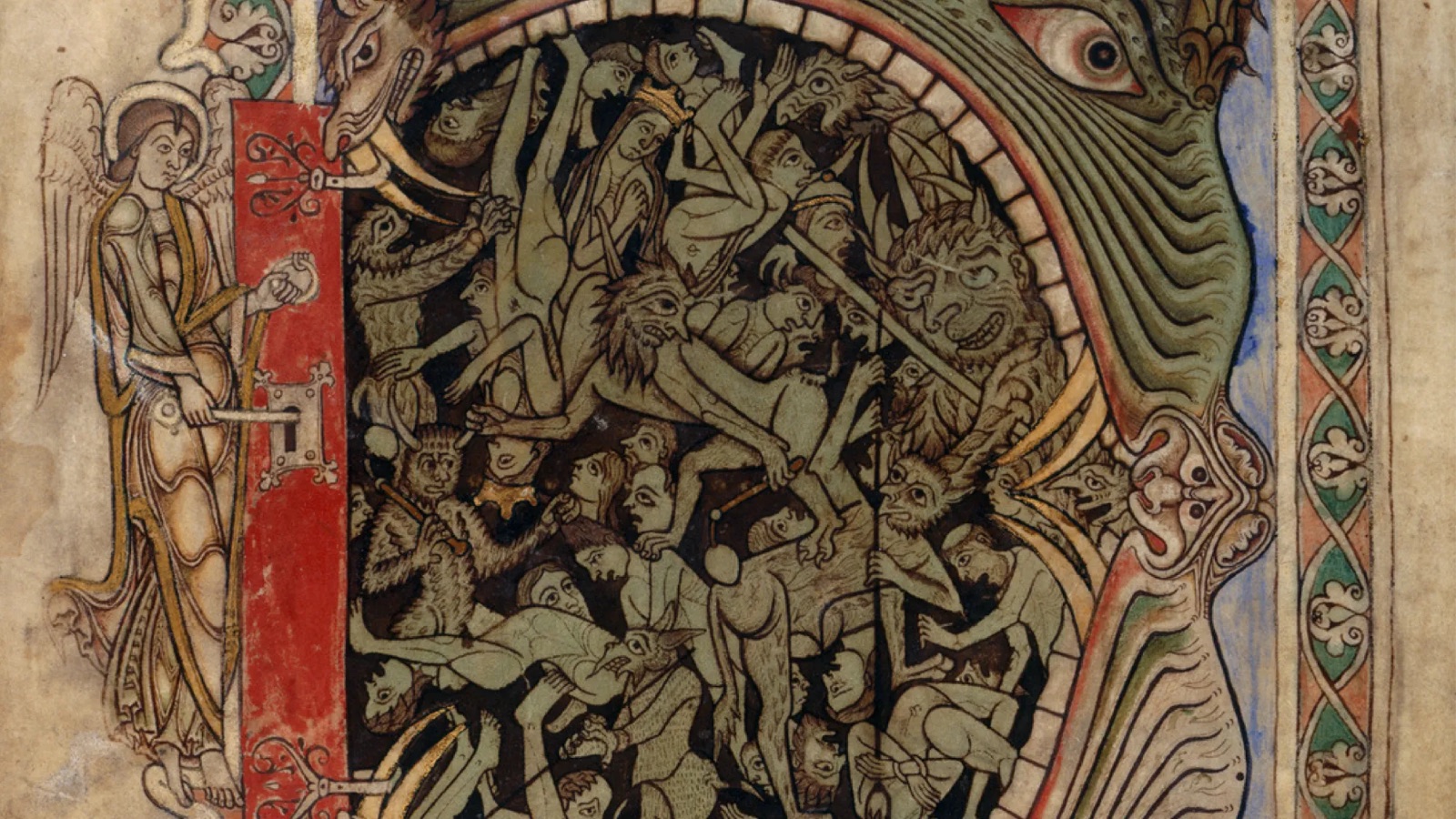
The second half of the season’s character came at the turn of the millennium. Around 998 Odilo, Abbot of the great Burgundian monastery of Cluny, decreed that on 2 November, the day after All Saints, his monks should pray and offer Mass for all the faithful departed.⁸ Cluny’s influence was vast, and the commemoration of All Souls spread steadily through medieval Europe. With it came the custom that gives Halloween so much of its later atmosphere: a three-day season, from the eve of All Saints to All Souls, in which medieval Christians turned their minds deliberately towards death, judgement and the dead they loved. Here we find the honest root of the night’s association with ghosts and graves. It grew from a theology in which the departed were not merely remembered but prayed for, in which purgatory was a real place and the living could help the souls held there by their prayers, alms and Masses.
In England this produced customs that look very like the ancestors of what children do today. Parish bells were rung through the night of All Hallows to comfort the souls of the dead and call the living to prayer. The poor went “souling”, calling at the houses of the better-off to beg for soul cakes, small spiced loaves given in return for the promise to pray for the household’s dead. Shakespeare could count on his audience recognising the practice; in The Two Gentlemen of Verona a lovesick young man is mocked for speaking “puling, like a beggar at Hallowmas”.⁹ The figure going from door to door at the end of October, receiving food in exchange for something offered back, belongs to this world of Catholic charity and intercession, and it is far better documented than any rite of pre-Christian Ireland.
The Reformation in England struck at the heart of all this. Because Protestant theology rejected purgatory and prayers for the dead, All Souls disappeared from the Prayer Book, and the ringing of bells on All Hallows night became a target for reformers. Cranmer was already urging Henry VIII to stop it in the 1540s, and Elizabethan authorities pursued parishes that kept up the practice.¹⁰ All Saints’ Day survived in the Church of England, as it still does, but the night before it lost much of its official purpose. In Scotland and Ireland, and in parts of northern England, the old eve lived on in the home and the farmyard, where fortune-telling, bonfires and guising (going about in disguise) carried on more or less untroubled by doctrine. It was this domestic, half-remembered festival that Burns put into verse, and that Scottish and Irish emigrants carried across the Atlantic in the nineteenth century, where it grew into the Halloween the world now knows.
Where, then, did the conviction come from that Halloween is pagan at heart? Much of it was the work of Victorian scholarship. In his Hibbert Lectures of 1886 the Welsh scholar John Rhŷs argued that Samhain had been the Celtic New Year, a claim built more on modern Welsh and Manx folk custom than on early evidence.¹¹ Sir James Frazer took up the idea in The Golden Bough, where Halloween became one of the old fire festivals of a pagan Europe, a survival of a dying-and-rising agricultural religion that lay beneath the Christian surface.¹² Frazer’s books were enormously popular, and his picture of Christian feasts as disguised pagan rites shaped how the twentieth century thought about folklore. Historians have since been much more cautious. The medieval Irish tales set at Samhain, in which the boundary with the otherworld grows thin and the dead and the síd-folk walk abroad, were written down by Christian monks between the ninth and twelfth centuries, and they tell us chiefly that Samhain was a time of assembly, feasting and storytelling. They offer almost nothing about pagan worship, and nothing at all that describes a festival of the dead.¹³
None of this means that the night has no older layers at all, and to claim otherwise would be to replace one myth with another. Samhain was real, and the beginning of winter was a natural moment, in any farming society, for lighting fires, counting livestock and wondering what the dark months would bring. Some of the fortune-telling games Burns described may well be older than any surviving record of them, and Hutton himself allows that a seasonal festival of some kind probably lay behind the Irish and Scottish customs of the eve.¹⁴ The fairer conclusion is that two things happened to fall at the same point in the year: a Christian feast that arrived at 1 November by its own route, and a northern seasonal turning that had long been marked in the same weeks. Over the centuries the folk customs of one gathered round the name and the theology of the other, and the result was a night that belonged to the Church’s calendar long before it belonged to anyone’s imagination of paganism.
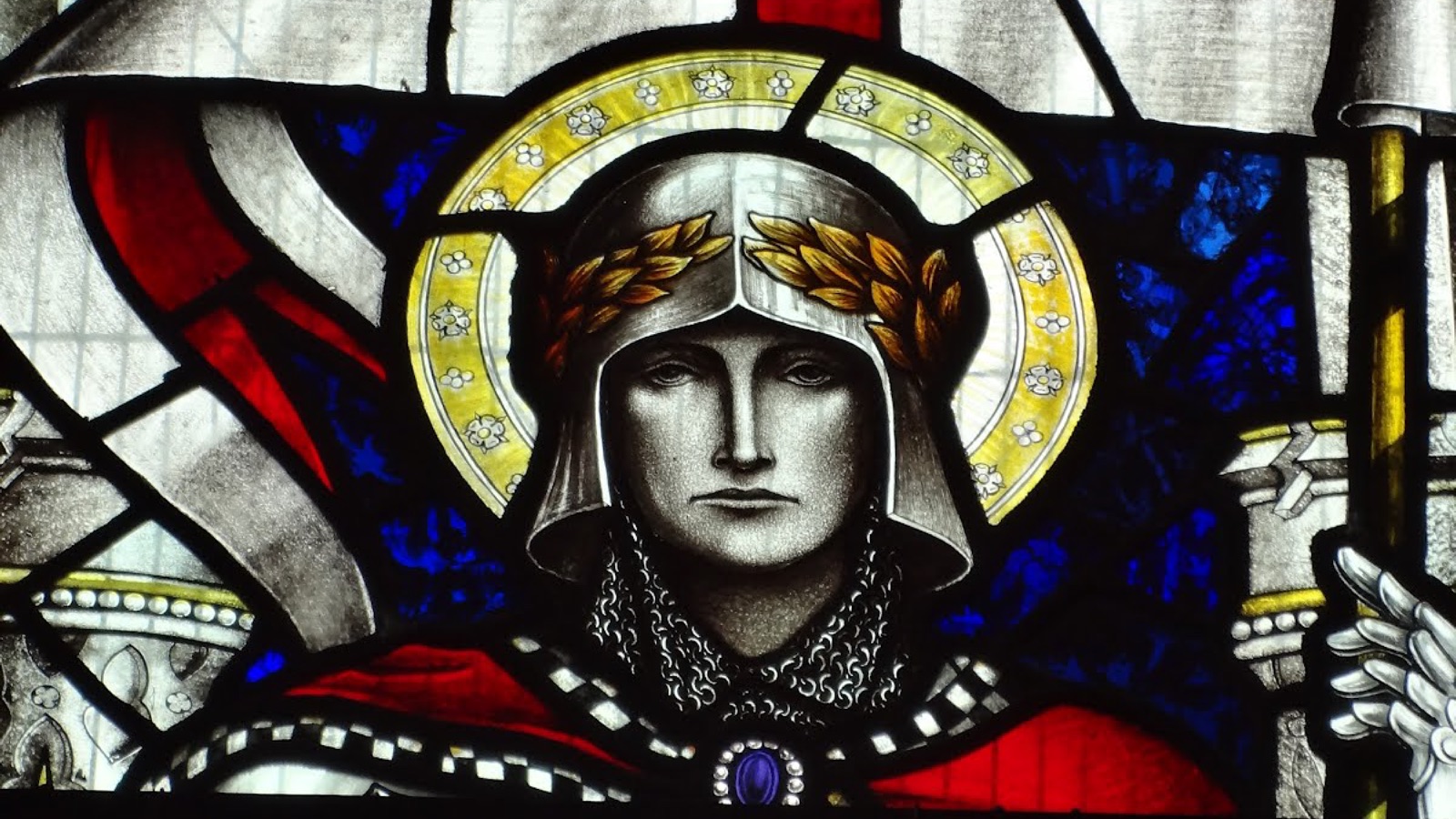
The name has always told the truth, even when the story around it has not. Halloween is the eve of a feast, and like Christmas Eve or Easter Eve it takes its meaning from the day that follows it. On 1 November, in parish churches up and down Britain, congregations will still sing of the saints “who from their labours rest”, in William Walsham How’s Victorian hymn, while the pumpkins of the night before slump quietly on the doorsteps outside.¹⁵ The hallows the eve was named for are still being remembered, a few yards from the sweet wrappers in the gutter.
For the customs that survived in the shadows, from souling to the Manx Hop-tu-Naa, watch our video The Real History of Halloween.
Notes
¹ Robert Burns, “Halloween”, in Poems, Chiefly in the Scottish Dialect (Kilmarnock, 1786).
² Bede, Ecclesiastical History of the English People, II.4.
³ Liber Pontificalis, Life of Gregory III; trans. Raymond Davis, The Lives of the Eighth-Century Popes (Liverpool University Press, 1992).
⁴ Alcuin, letters to Arno of Salzburg, in Ernst Dümmler (ed.), Epistolae Karolini Aevi II, MGH Epistolae IV (Berlin, 1895).
⁵ Ronald Hutton, The Stations of the Sun: A History of the Ritual Year in Britain (Oxford University Press, 1996), chapter on Samhain and All Hallows.
⁶ Whitley Stokes (ed.), Félire Óengusso Céli Dé: The Martyrology of Oengus the Culdee (Henry Bradshaw Society, 1905), entry for 20 April.
⁷ Hutton, Stations of the Sun.
⁸ Odilo of Cluny, Statutum de defunctis, in J.-P. Migne (ed.), Patrologia Latina, vol. 142.
⁹ William Shakespeare, The Two Gentlemen of Verona, II.i.
¹⁰ Hutton, Stations of the Sun; see also Eamon Duffy, The Stripping of the Altars (Yale University Press, 1992).
¹¹ John Rhŷs, Lectures on the Origin and Growth of Religion as Illustrated by Celtic Heathendom (Hibbert Lectures, 1886; London, 1888).
¹² James George Frazer, The Golden Bough: A Study in Magic and Religion (abridged edn, London, 1922), chapters on the fire festivals of Europe.
¹³ Nicholas Rogers, Halloween: From Pagan Ritual to Party Night (Oxford University Press, 2002), ch. 1.
¹⁴ Hutton, Stations of the Sun.
¹⁵ William Walsham How, “For All the Saints” (1864).